
Xiaomi Pad 8 Review: Display, Performance, Battery & Should You Buy in 2025?
Introduction
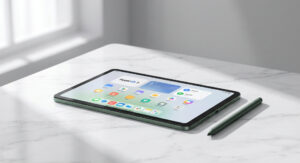
The Xiaomi Pad 8 is finally here, and it’s expected to launch globally very soon. While the Pro version of Xiaomi tablets often stays limited to China, the vanilla Xiaomi Pad 8 is the one most Indian buyers will actually get their hands on. This tablet brings meaningful upgrades over the Pad 7, including the powerful Snapdragon 8s Gen 4 chipset, a larger 9,200mAh battery, and a slimmer, lighter design.
If you’re looking for a mid-range Android tablet for media consumption, casual gaming, productivity, or online classes, this review covers everything you need to know. We’ll discuss the display quality, real-world performance, battery life, software experience, and whether the Xiaomi Pad 8 offers good value for money in India.
Key Specifications at a Glance
| Specification | Xiaomi Pad 8 |
|---|---|
| Display | 11.2-inch IPS LCD, 3.2K resolution, 144Hz refresh rate, 800 nits (tested ~900 nits) |
| Processor | Qualcomm Snapdragon 8s Gen 4 |
| RAM & Storage | 8GB RAM + 128GB storage (base variant) |
| Rear Camera | 13MP |
| Front Camera | 8MP |
| Battery | 9,200mAh |
| Charging | 45W wired charging |
| Software | HyperOS 3 based on Android 16 |
| Connectivity | USB 3.2 Gen 1 Type-C with video out, Wi-Fi, Bluetooth |
| Build | Metal body, Dolby Vision & Dolby Atmos support |
| Colour Options | Green, Blue, Gray |
| Price (Expected) | ₹24,999 onwards (estimated for India) |
Design & Build Quality
The Xiaomi Pad 8 carries forward the same design language we saw on the Pad 7 and even the Pad 8 Pro. It features an all-metal build that feels premium and sturdy in hand. Xiaomi offers this tablet in three colour options: Green, Blue, and Gray.
What’s impressive is how Xiaomi has managed to make this tablet 0.4mm slimmer and 15 grams lighter than the Pad 7, all while increasing the battery capacity by 10%. This makes the Xiaomi Pad 8 more comfortable to hold during long reading or viewing sessions.
At the back, you’ll find pogo pins for connecting the optional keyboard case. Near the volume keys, there’s a magnetic attachment area for the Focus Pro stylus. However, like the Pad 7, the vanilla Xiaomi Pad 8 does not include a fingerprint scanner, which is a bit disappointing in 2025.
Display Quality
The Xiaomi Pad 8 features the same excellent 11.2-inch IPS LCD panel found on its predecessor. It offers a sharp 3.2K resolution with a smooth 144Hz refresh rate, making it ideal for gaming, streaming, and reading.

Xiaomi claims a peak brightness of 800 nits, but real-world testing shows it can actually reach close to 900 nits. This ensures good visibility even in bright indoor environments. The display supports Dolby Vision, which enhances the HDR viewing experience on platforms like Netflix and Prime Video.
For those who prefer a matte finish to reduce reflections, Xiaomi also offers a matte display variant, which is a thoughtful addition for artists or users who work outdoors.
Verdict: The display is one of the strongest aspects of the Xiaomi Pad 8. It’s bright, sharp, and smooth enough for both entertainment and productivity.
Performance & Gaming
Here’s where the Xiaomi Pad 8 truly shines. This year, Xiaomi has upgraded the chipset to the Qualcomm Snapdragon 8s Gen 4, which is a significant jump from the Snapdragon 7 Plus Gen 3 used in the Pad 7.
In real-world terms, you can expect around 25-30% better CPU and GPU performance compared to last year’s model. Whether you’re multitasking between apps, editing documents, or playing demanding games like BGMI, Genshin Impact, or Call of Duty Mobile, the Xiaomi Pad 8 handles it all smoothly.
During extended gaming sessions, the tablet did not heat up noticeably, which is a good sign of thermal management. Unfortunately, the tablet did not support 3D Mark benchmarking, so we couldn’t test stability scores. But based on everyday usage, performance is rock solid.
One concern: The base variant comes with only 128GB storage, and there’s no microSD card slot. In 2025, this feels limiting, especially if you plan to download games, movies, or offline content. You might find yourself managing storage sooner than expected.
Camera Performance
The Xiaomi Pad 8 retains the same camera setup as the Pad 7:
- Rear Camera: 13MP
- Front Camera: 8MP
For a tablet, these cameras are perfectly adequate. The rear camera handles casual photos, document scanning, and video recording just fine. The 8MP front camera is suitable for video calls on Zoom, Google Meet, or Microsoft Teams.
Don’t expect flagship-level photography here, but for a device meant primarily for media and productivity, the cameras do their job.
Battery Life & Charging
Xiaomi has bumped up the battery to 9,200mAh, which is about 10% larger than the Pad 7. Combined with the efficient Snapdragon 8s Gen 4 chip, the Xiaomi Pad 8 delivers excellent battery life.
During regular use involving streaming, browsing, and light gaming, the tablet easily lasts a full day or more. Heavy users can expect around 8-10 hours of screen-on time, which is impressive for this category.
Charging is handled by a 45W charger included in the box. While this is slower than the 67W charger on the Pro model, it still charges the large battery reasonably fast.
An interesting addition is 22.5W reverse wired charging. You can use the Xiaomi Pad 8 to top up your smartphone in emergencies, which is a handy feature.
Software & Updates
The Xiaomi Pad 8 runs HyperOS 3 based on Android 16. The software experience is smooth, responsive, and well-optimized for the tablet’s hardware.
Key Software Features:
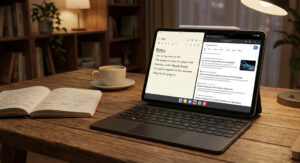
- Split Screen: You can run two apps side by side. Xiaomi has improved this feature, allowing one app to take over most of the screen when needed.
- Workstation Mode: This mode lets you use multiple floating windows, ideal when connecting the tablet to an external monitor via USB-C.
- Phone Mirroring: You can easily connect your Xiaomi phone to the tablet and access it directly from the Pad 8. It even supports a shared clipboard.
- Apple Device Compatibility: Surprisingly, the Xiaomi Pad 8 works well with Apple devices. You can even use it as a second touchscreen display for a MacBook.
Xiaomi seems to have put genuine effort into making the software productive and versatile.
Connectivity & Extra Features
The Xiaomi Pad 8 offers solid connectivity options:
- USB 3.2 Gen 1 Type-C with video output support
- Wi-Fi and Bluetooth
- Quad speakers with Dolby Atmos
The quad speaker setup delivers good audio quality for movies, music, and games. However, due to the slimmer design, the speakers are slightly weaker than the Pad 7. That said, they’re still among the best in this price segment.
Optional Accessories:
- Flip Case: Magnetic attachment, folds into a stand
- Focus Pro Stylus: Features a haptic motor and programmable capacitive area
- Floating Keyboard Case: Similar to Apple’s Magic Keyboard implementation
These accessories enhance the productivity experience, especially for students and professionals.
Pros & Cons
| ✅ Pros | ❌ Cons |
|---|---|
|
|
Comparison: Xiaomi Pad 8 vs Competitors
| Feature | Xiaomi Pad 8 | OnePlus Pad 2 | Samsung Galaxy Tab S9 FE |
|---|---|---|---|
| Display | 11.2″ 3.2K 144Hz IPS | 12.1″ 3K 144Hz IPS | 10.9″ 2304×1440 90Hz |
| Processor | Snapdragon 8s Gen 4 | Snapdragon 8 Gen 3 | Exynos 1380 |
| RAM/Storage | 8GB/128GB | 12GB/256GB | 6GB/128GB |
| Battery | 9,200mAh | 9,510mAh | 8,000mAh |
| Charging | 45W | 67W | 45W |
| Price (India) | ~₹24,999 (expected) | ₹39,999 | ₹44,999 |
Analysis: The Xiaomi Pad 8 offers flagship-level performance at a significantly lower price than the OnePlus Pad 2 and Samsung Galaxy Tab S9 FE. If budget is a priority, the Xiaomi Pad 8 delivers the best value.
Price & Variants in India
While official Indian pricing is yet to be announced, based on the Chinese launch price and the 10% increase over the Pad 7, we can expect the following:
| Variant | Expected Price (India) |
|---|---|
| 8GB + 128GB | ₹24,999 – ₹26,999 |
| 8GB + 256GB | ₹28,999 – ₹30,999 |
| 12GB + 256GB | ₹32,999 – ₹34,999 |
Availability: Expected to be available on Amazon India, Flipkart, Mi.com, and offline Xiaomi stores.
Who Should Buy This Tablet?
✅ Ideal For:
- Students looking for a tablet for online classes and note-taking
- Media enthusiasts who want a great display for Netflix, YouTube, and gaming
- Professionals needing a secondary device for productivity
- Budget-conscious buyers who want flagship-level performance without paying flagship prices
- Xiaomi ecosystem users who want seamless connectivity with their phones
❌ Who Should Avoid:
- Users who need more than 128GB storage without cloud dependency
- Those who require a fingerprint scanner for security
- Heavy gamers who want the absolute best speakers
- Buyers looking for a compact tablet (11.2 inches is quite large)
Frequently Asked Questions (FAQs)
1. Is Xiaomi Pad 8 good for gaming?
Yes, the Snapdragon 8s Gen 4 chipset handles demanding games like BGMI and Genshin Impact smoothly without overheating.
2. Does Xiaomi Pad 8 have a fingerprint scanner?
No, the vanilla Xiaomi Pad 8 does not include a fingerprint scanner. You’ll need to rely on face unlock or PIN/password.
3. Can I expand storage on Xiaomi Pad 8?
No, there is no microSD card slot. The 128GB base storage cannot be expanded.
4. Does Xiaomi Pad 8 support stylus input?
Yes, it supports the Xiaomi Focus Pro stylus, which connects magnetically and charges on the tablet.
5. What is the expected price of Xiaomi Pad 8 in India?
The base variant is expected to launch around ₹24,999 to ₹26,999 in India.
6. Is Xiaomi Pad 8 good for students?
Yes, it’s excellent for online classes, note-taking with stylus, reading, and light productivity tasks.
7. Does Xiaomi Pad 8 support video output?
Yes, the USB Type-C port supports video output, allowing you to connect to external monitors.
8. How long does the battery last on Xiaomi Pad 8?
With regular use, expect 8-10 hours of screen-on time thanks to the 9,200mAh battery.
Final Verdict
The Xiaomi Pad 8 is a well-rounded Android tablet that quietly gets everything right. It offers a stunning 3.2K 144Hz display, powerful Snapdragon 8s Gen 4 performance, a massive 9,200mAh battery, and a refined software experience with HyperOS 3.
Yes, the 128GB base storage without microSD expansion is limiting, and the lack of a fingerprint scanner feels like an oversight in 2025. But if you can live with these compromises, the Xiaomi Pad 8 offers exceptional value for money.
Should You Buy?
- ✅ Yes – If you want a capable tablet for media, gaming, and productivity under ₹30,000
- ❌ No – If you need more storage or a fingerprint scanner
- ⚠️ Depends – If you’re a heavy gamer, consider the Pro version for better speakers
Overall, the Xiaomi Pad 8 is one of the best mid-range tablets launching in 2025 and deserves serious consideration if you’re in the market for an Android tablet in India.
For more tablet reviews, comparisons, and buying guides, stay tuned to Techzing.in.