
OnePlus 15 vs iQOO 15: Camera, Performance, Battery & Which Flagship Should You Buy in 2025?
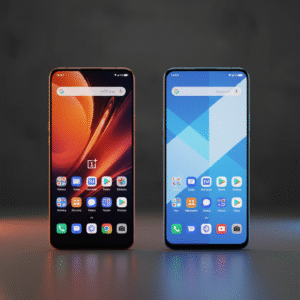
The OnePlus 15 and iQOO 15 have created quite a buzz in India’s flagship smartphone market. Both phones pack the powerful Snapdragon 8 Elite Zen5 processor, similar pricing, and premium features. If you’re confused about which one deserves your money, you’re not alone.
This detailed comparison covers everything you need to know – from design and display quality to camera performance, gaming capabilities, battery life, and software experience. Whether you’re a mobile gamer, photography enthusiast, or someone who wants the best overall flagship experience, this article breaks down exactly where each phone excels and where it falls short.
By the end, you’ll have a clear picture of which smartphone offers better value for your specific needs in 2025.
Key Specifications at a Glance
| Specification | OnePlus 15 | iQOO 15 |
|---|---|---|
| Display | 6.78-inch 1.5K AMOLED, 165Hz, 3600 nits peak | 6.85-inch 2K AMOLED, 144Hz, 6000 nits peak |
| Processor | Snapdragon 8 Elite Zen5 | Snapdragon 8 Elite Zen5 |
| RAM | LPDDR5X Ultra Plus (10.7 Gbps) | LPDDR5X Ultra (9.6 Gbps) |
| Storage | UFS 4.1 | UFS 4.1 |
| Rear Camera | 50MP (Main) + 50MP (Ultrawide) + 50MP (Telephoto) | 50MP (Main) + 50MP (Ultrawide) + 50MP (Telephoto) |
| Front Camera | 32MP | 32MP |
| Battery | 7300mAh (Dual Cell) | 7000mAh (Single Cell) |
| Charging | 120W Wired, 50W Wireless | 100W Wired (PD Support), 40W Wireless |
| Software | OxygenOS (Android 15) | Origin OS (Android 15) |
| IP Rating | IP66 to IP69K | IP68 + IP69 |
| Connectivity | Wi-Fi 7, Bluetooth 6.0 | Wi-Fi 7, Bluetooth 5.4 |
| Price (India) | Starting ~₹69,999 | Starting ~₹69,999 |
Design & Build Quality
Both the OnePlus 15 and iQOO 15 follow the current flagship trend of flat displays and flat back panels. The frames on both phones feel solid and premium. Essentially, both devices have adopted a boxy design language that’s becoming standard among expensive smartphones.
However, OnePlus 15 has a slight edge here. The Sandstorm colour variant I tested features Micro Arc Oxidation on its edges. This coating provides extra strength to the metal frame, making it more durable over time.
An interesting detail – the Black colour of iQOO 15 and the Sandstorm colour of OnePlus 15 both use fiberglass back panels. Other colour variants of both phones come with proper glass backs.
The camera modules look quite similar on both devices. But iQOO 15 adds something unique – dynamic lighting around the camera housing that you can customise according to your preference.
OnePlus counters with its signature Alert Slider, which now supports custom actions. You can set it to open AI Mind Space or perform different tasks with single or double clicks.
Weight distribution feels excellent on both phones, though the iQOO 15 felt marginally lighter during my testing. Both phones feature USB Type-C 3.2 ports, which is great for fast data transfers.
IP Rating Comparison:
- OnePlus 15: IP66 to IP69K
- iQOO 15: IP68 + IP69
OnePlus offers slightly better water and dust resistance, especially with that IP69K rating for high-pressure water jets.
Display Quality
This is where things get interesting. Both phones use flat AMOLED panels, but the specifications differ significantly.
OnePlus 15 Display Specs:
- 6.78-inch screen size
- 1.5K resolution
- 165Hz refresh rate
- 3600 nits peak brightness
- 1800 nits HBM
- Gorilla Glass Victus 2 protection
iQOO 15 Display Specs:
- 6.85-inch screen size
- 2K resolution
- 144Hz refresh rate
- 6000 nits peak brightness
- 2600 nits HBM
- M14 LTPO panel
In direct sunlight testing, both displays showed good visibility. However, iQOO 15 appeared slightly more visible outdoors thanks to its higher peak brightness.
I watched various content types side by side on both phones. One thing became clear – iQOO displays punchy, vibrant colours while OnePlus focuses on realistic and natural colour reproduction. If colour accuracy matters to you, OnePlus performs better.
Both phones support HDR on Netflix. Highlight details appeared slightly better on iQOO, but overall HDR performance was excellent on both devices.
Both feature LTPO panels for variable refresh rates. OnePlus gives you the option to run certain apps at 165Hz, which is useful for gaming. iQOO uses its M14 panel primarily for efficiency.
Looking at the phones side by side, OnePlus 15 has noticeably thinner bezels, resulting in a better screen-to-body ratio.
Anti-Reflection Solutions:
iQOO 15 comes with a pre-applied anti-reflective screen protector. However, this protector scratches easily, and while iQOO has promised free replacements, the exact number of replacements remains unclear.
OnePlus 15 doesn’t include any anti-reflective coating but offers an anti-reflective tempered glass for purchase on their website.
Performance & Gaming
Both phones run the same Snapdragon 8 Elite Zen5 processor, making them equally powerful on paper. But there’s a technical difference worth noting.
RAM Difference:
- OnePlus 15: LPDDR5X Ultra Plus RAM at 10.7 Gbps
- iQOO 15: LPDDR5X Ultra RAM at 9.6 Gbps
This faster RAM in OnePlus 15 is the same type Samsung will reportedly use in the Galaxy S26 Ultra.
Storage speeds are identical – both phones use UFS 4.1 with comparable read/write speeds.
Benchmark Results:
- Geekbench: OnePlus performs better
- AnTuTu: iQOO performs better
- 3DMark Stress Test: iQOO scored higher loop scores, but OnePlus showed better stability
Real-World Gaming Performance:
Genshin Impact:
OnePlus 15 has a massive advantage here. It can run Genshin Impact at 120fps – currently the only Android phone capable of this. Despite having the same processor, iQOO 15 runs Genshin at 60fps for now.
Wuthering Waves:
Both phones offer 60fps options with very similar average frame rates. OnePlus ran slightly cooler during extended gaming sessions, suggesting a more effective cooling system.
BGMI:
- iQOO 15: Up to 144fps
- OnePlus 15: Up to 165fps
Both phones use frame rate interpolation for these high refresh rates. With interpolation off, both run at 120fps.
Call of Duty Mobile:
OnePlus supports up to 165fps here as well.
OnePlus has clearly prioritised high refresh rate gaming with its 165Hz display. They’ve also promoted their Wi-Fi chip specifically for better network stability during competitive gaming.
Connectivity:
- Both phones: Wi-Fi 7 support
- iQOO 15: Bluetooth 5.4
- OnePlus 15: Bluetooth 6.0
Camera Performance (Day, Night, Video)
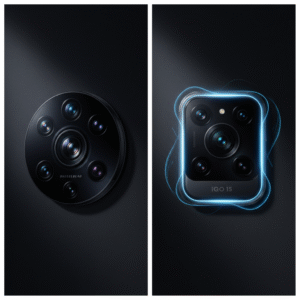
Both phones feature a triple 50MP camera setup, but sensor sizes differ slightly. iQOO’s telephoto lens has a larger sensor, which becomes important for zoom photography.
Main Camera (Daylight)
The biggest difference here is output resolution. OnePlus captures 26MP photos while iQOO shoots at 12.5MP. This means OnePlus photos retain more detail when you zoom in or crop.
HDR processing is where iQOO shines. It handles the balance between bright areas and shadows better than OnePlus.
However, colour reproduction favours OnePlus significantly. Colours appear more accurate and natural. Human skin tones particularly benefit from OnePlus’s processing.
Portrait Mode
At 35mm focal length, OnePlus delivers better portraits with superior edge detection and natural bokeh.
Beyond 35mm zoom, iQOO’s noise reduction improves, giving it a slight edge in telephoto portraits.
Telephoto Performance
iQOO wins the telephoto battle. When you zoom in, iQOO maintains better detail and sharpness thanks to its larger telephoto sensor.
Ultrawide Lens
Both phones perform excellently in good lighting conditions. In low light, iQOO struggles more while OnePlus maintains better consistency.
Selfie Camera
Both phones feature 32MP front cameras. OnePlus produces more natural skin tones across different lighting conditions. Noise reduction in portrait selfies is also better on OnePlus.
Video Recording
Both phones can record 4K 60fps from all lenses. In daylight, both capture excellent footage. iQOO tends to produce brighter videos while OnePlus focuses on colour accuracy, resulting in more natural-looking footage.
OnePlus supports Log and Dolby Vision recording at 4K 120fps – a feature absent on iQOO 15.
Camera Verdict:
OnePlus wins in main camera performance, skin tones, low light, selfies, and video recording. iQOO’s advantage lies in its superior telephoto lens and zoom portraits.
Battery Life & Charging
| Feature | OnePlus 15 | iQOO 15 |
|---|---|---|
| Battery Capacity | 7300mAh | 7000mAh |
| Battery Type | Dual Cell | Single Cell |
| Wired Charging | 120W | 100W |
| Wireless Charging | 50W | 40W |
| Full Charge Time | 35-36 minutes | 1 hour 5 minutes |
OnePlus’s dual-cell battery architecture provides a significant charging speed advantage. You can fully charge the 7300mAh battery in about 35 minutes with the 120W charger.
iQOO’s 100W charger takes over an hour for a full charge. However, it supports Power Delivery (PD), meaning you can use it to charge laptops too.
For wireless charging, OnePlus supports 50W while iQOO offers 40W speeds.
Software & Updates
This year’s software comparison is particularly interesting. iQOO has finally moved from FunTouch OS to Origin OS, while OnePlus’s OxygenOS continues to improve.
Update Policy:
- iQOO 15: 5 years Android updates + 7 years security patches
- OnePlus 15: 4 years Android updates + 6 years security patches
iQOO offers a longer software support commitment on paper.
AI Features
OnePlus 15:
- Mind Space integration (works with Gemini)
- AI Writer (works across all apps including Instagram and WhatsApp)
- AI Reflection Eraser
- AI Unblur
- AI Object Eraser
iQOO 15:
- AI Eraser
- Image Expander
- AI Retouch
- Various gallery AI tools
OnePlus’s AI implementation feels more refined and integrated. The Mind Space feature provides a dedicated AI assistant experience that iQOO currently lacks.
User Experience
OxygenOS feels significantly more polished. Opening multiple apps side by side, OnePlus shows smooth parallel animations while iQOO focuses purely on speed with snappy but basic transitions.
Small refinements matter – like the search bar placement in the app drawer. OnePlus places it at the bottom for easier one-handed use, while iQOO keeps it at the top.
Additional OnePlus Advantages:
- Full-screen Always-on Display
- Fully customisable Control Centre
- Better overall optimisation
iQOO’s switch from FunTouch OS to Origin OS is a positive move, and it should improve over time. But currently, OnePlus offers a more refined software experience.
Connectivity & Extra Features
| Feature | OnePlus 15 | iQOO 15 |
|---|---|---|
| Wi-Fi | Wi-Fi 7 | Wi-Fi 7 |
| Bluetooth | 6.0 | 5.4 |
| USB Port | Type-C 3.2 | Type-C 3.2 |
| NFC | Yes | Yes |
| 5G Bands | Full India support | Full India support |
| Alert Slider | Yes (Customisable) | No |
| Dynamic Lighting | No | Yes (Camera ring) |
OnePlus’s Bluetooth 6.0 offers better range, lower latency, and improved audio quality compared to iQOO’s Bluetooth 5.4.
Pros & Cons
OnePlus 15
| Pros ✅ | Cons ❌ |
|---|---|
| Superior main camera and video quality | Shorter software update commitment |
| Faster charging (35 mins full charge) | Lower display resolution (1.5K vs 2K) |
| 165Hz display for better gaming | Telephoto lens not as strong |
| Better software experience | No anti-reflective solution included |
| Bluetooth 6.0 | |
| Alert Slider customisation | |
| Cooler during gaming |
iQOO 15
| Pros ✅ | Cons ❌ |
|---|---|
| Better telephoto camera | Slower charging (1+ hour) |
| Higher resolution 2K display | Less refined software |
| Higher peak brightness (6000 nits) | No dedicated AI assistant |
| Longer update policy (5+7 years) | Only 60fps in Genshin Impact |
| PD charger supports laptops | Bluetooth 5.4 only |
| Dynamic camera lighting | Screen protector scratches easily |
Comparison with Competitors
| Feature | OnePlus 15 | iQOO 15 | Samsung S24+ | Pixel 9 Pro |
|---|---|---|---|---|
| Processor | SD 8 Elite | SD 8 Elite | SD 8 Gen 3 | Tensor G4 |
| Display | 1.5K 165Hz | 2K 144Hz | QHD+ 120Hz | QHD+ 120Hz |
| Main Camera | 50MP | 50MP | 50MP | 50MP |
| Battery | 7300mAh | 7000mAh | 4900mAh | 5060mAh |
| Charging | 120W | 100W | 45W | 37W |
| Price | ~₹69,999 | ~₹69,999 | ~₹74,999 | ~₹84,999 |
OnePlus 15 and iQOO 15 offer significantly better battery capacity and charging speeds compared to Samsung and Google flagships at similar or lower prices.
Price & Variants in India
Both phones launched at similar price points in India:
OnePlus 15:
- 12GB + 256GB: ~₹69,999
- 16GB + 512GB: ~₹79,999
iQOO 15:
- 12GB + 256GB: ~₹69,999
- 16GB + 512GB: ~₹79,999
Availability:
- OnePlus 15: OnePlus.in, Amazon India, Flipkart, OnePlus stores
- iQOO 15: iQOO.com, Amazon India, Flipkart
Both phones offer no-cost EMI options and exchange offers during sale periods.
Who Should Buy This Phone?
Buy OnePlus 15 if you:
- Prioritise camera quality, especially for videos
- Want the fastest charging speeds
- Play games like Genshin Impact at high frame rates
- Prefer refined, polished software experience
- Need Bluetooth 6.0 for latest audio devices
- Value the Alert Slider functionality
Buy iQOO 15 if you:
- Need the best telephoto zoom camera
- Want the brightest display for outdoor use
- Prefer longer software update commitment
- Like the dynamic camera lighting feature
- Need a PD charger that works with laptops
Skip Both if you:
- Want compact phones (both are large)
- Need stock Android experience
- Have budget constraints under ₹50,000
Frequently Asked Questions (FAQs)
1. Which phone has a better camera – OnePlus 15 or iQOO 15?
OnePlus 15 offers better main camera performance, more accurate colours, superior video recording, and better selfies. iQOO 15 has an edge only in telephoto zoom photography.
2. Can OnePlus 15 run Genshin Impact at 120fps?
Yes, OnePlus 15 is currently the only Android phone that supports 120fps in Genshin Impact. iQOO 15 runs the game at 60fps despite having the same processor.
3. Which phone charges faster – OnePlus 15 or iQOO 15?
OnePlus 15 charges significantly faster. Its 7300mAh battery fully charges in 35-36 minutes with 120W charging, while iQOO 15 takes over an hour with 100W charging.
4. Is iQOO 15 display better than OnePlus 15?
iQOO 15 has higher resolution (2K vs 1.5K) and brighter peak brightness (6000 vs 3600 nits). However, OnePlus 15 offers more accurate colours and thinner bezels.
5. Which phone has better software support?
iQOO 15 promises 5 years of Android updates plus 7 years of security patches. OnePlus 15 offers 4 years plus 6 years. iQOO wins on paper.
6. Are OnePlus 15 and iQOO 15 waterproof?
Both phones have high IP ratings. OnePlus 15 has IP69K rating (better for high-pressure water), while iQOO 15 has IP68+IP69 rating.
7. Which phone is better for gaming?
OnePlus 15 is better for gaming with 165Hz display, 120fps Genshin support, better cooling, and Bluetooth 6.0 for wireless controllers.
8. Should I wait for Samsung S25 instead?
Samsung S25 series will likely be more expensive. If you want flagship performance with better battery and charging at a lower price, OnePlus 15 or iQOO 15 are solid choices right now.
Final Verdict
After thorough testing, both the OnePlus 15 and iQOO 15 prove themselves as excellent flagship smartphones. You won’t make a wrong choice picking either one.
However, OnePlus 15 emerges as the better overall package for most users. It offers superior camera performance (except telephoto), faster charging, better gaming optimisation with 165fps support, and a more refined software experience that comes from years of OxygenOS development.
iQOO 15 makes sense if you specifically need the best zoom camera or want that extra year of software updates. The brighter display is also appealing for heavy outdoor users.
| Value for Money: | Both phones offer similar value at the same price point. |
| Buying Recommendation: | OnePlus 15 – Yes, for most users. iQOO 15 – Yes, if telephoto photography is your priority. |
The flagship smartphone market in 2025 is getting more competitive, and it’s refreshing to see Indian consumers getting top-tier specifications from both brands at reasonable prices.